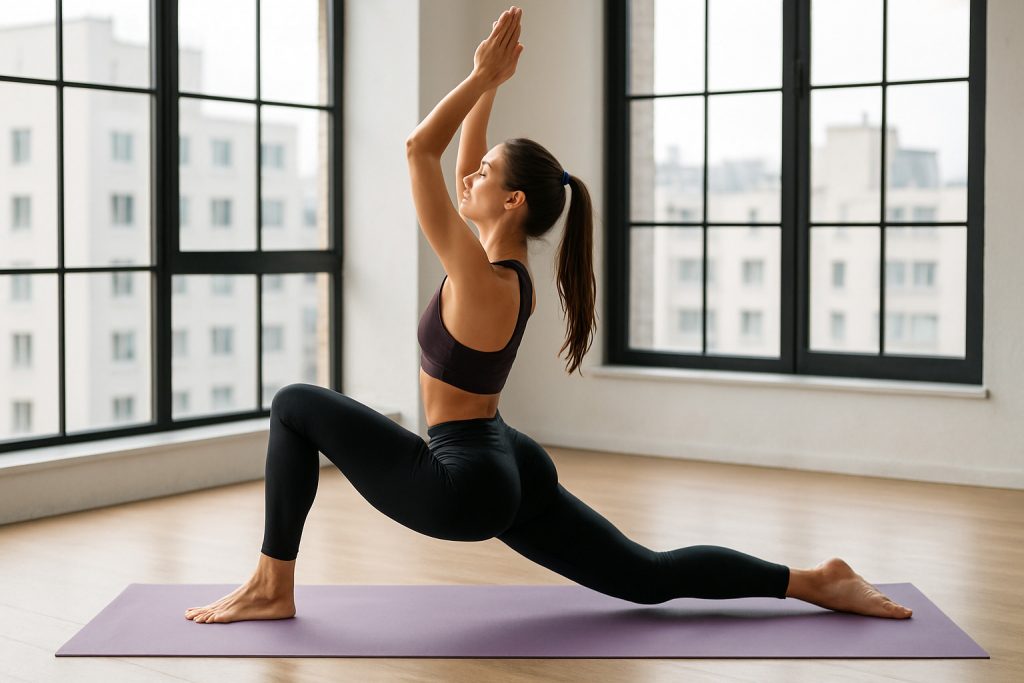
30-Minute Power Yoga Routine for a Full-Body Workout

30-Minute Power Yoga Routine for a Full-Body Workout

Looking for an efficient, energizing, and full-body fitness session you can do anywhere? Say hello to the 30-minute power yoga workout routine. Power yoga is more than just a flow—it’s a dynamic, strength-building practice that fuses movement with breath, activating every major muscle group.

Whether you’re short on time or looking for an alternative to traditional gym sessions, this routine delivers flexibility, strength, balance, and cardio—all in just half an hour.

In this article, we’ll walk you through the benefits of a power yoga workout, how to structure your session, and a complete 30-minute sequence designed to work your entire body from head to toe.

What Is Power Yoga?

Power yoga is a fast-paced, fitness-driven style of yoga rooted in Ashtanga and Vinyasa traditions. Unlike restorative or meditative yoga, power yoga emphasizes movement, breath control, muscular engagement, and endurance.

Key Characteristics of Power Yoga:

  • Dynamic flows rather than static holds
  • Core integration and whole-body awareness
  • Strength and cardio components
  • Focus on breath-to-movement synchronization
  • Designed to make you sweat!

Power yoga is perfect for those who want the mindfulness of yoga with the intensity of a workout.

Benefits of a Power Yoga Workout Routine

When done regularly, a well-structured yoga workout routine can improve both physical and mental fitness. Here are the top benefits:

1. Builds Lean Muscle

Through isometric holds and repeated movements, power yoga develops strength in the arms, legs, back, and core—without weights.

2. Improves Flexibility and Mobility

Each flow is designed to lengthen muscles while strengthening them, helping you move more freely and safely.

3. Burns Calories

Because of the fast-paced nature and muscle engagement, you can burn up to 300–500 calories in a 30-minute session.

4. Boosts Heart Rate and Endurance

Power yoga mimics a cardio workout, enhancing cardiovascular health and stamina.

5. Enhances Mental Focus

The mindful aspect of yoga trains your brain to stay present and grounded—boosting clarity and reducing stress.

Who Can Do This Yoga Workout Routine?

This 30-minute power yoga routine is suitable for:

  • Beginners with moderate fitness levels
  • Intermediate to advanced practitioners
  • Anyone looking to improve functional fitness without equipment
  • Runners, lifters, and desk workers seeking cross-training or recovery

Note: If you have injuries or medical conditions, consult a healthcare professional before starting any new workout routine.

Your 30-Minute Power Yoga Routine (Full-Body)

What you’ll need:

  • Yoga mat
  • Water bottle
  • Towel (optional)

Total Time: 30 Minutes

Structure:

  • 5 min warm-up
  • 20 min active flow
  • 5 min cool-down + relaxation

Warm-Up (5 Minutes)

Focus: Loosen joints, activate core, awaken breath

  1. Cat-Cow Pose (Marjaryasana-Bitilasana) – 1 min
    Mobilizes the spine and warms up the back
  2. Downward Dog (Adho Mukha Svanasana) – 1 min
    Lengthens hamstrings and opens shoulders
  3. Ragdoll Forward Fold – 1 min
    Releases the lower back and decompresses the spine
  4. Low Lunge with Side Stretch (both sides) – 1 min
    Opens hips and stretches obliques
  5. Standing Mountain Pose with Deep Breaths – 1 min
    Brings awareness to posture and breath

Power Flow (20 Minutes)

Focus: Strength, endurance, balance, core activation

Repeat This Sequence 2 Times

1. Sun Salutation B Flow (3 minutes)

  • Chair Pose → Forward Fold → Half Lift → Plank → Chaturanga → Upward Dog → Downward Dog
  • Right Foot Forward → Warrior I → Vinyasa Flow
  • Left Foot Forward → Warrior I → Vinyasa Flow

2. Warrior Series (4 minutes)

  • Warrior II (30 sec each side)
  • Reverse Warrior (30 sec each side)
  • Extended Side Angle Pose (30 sec each side)
  • Transition through Plank → Vinyasa

3. Balance & Core Flow (5 minutes)

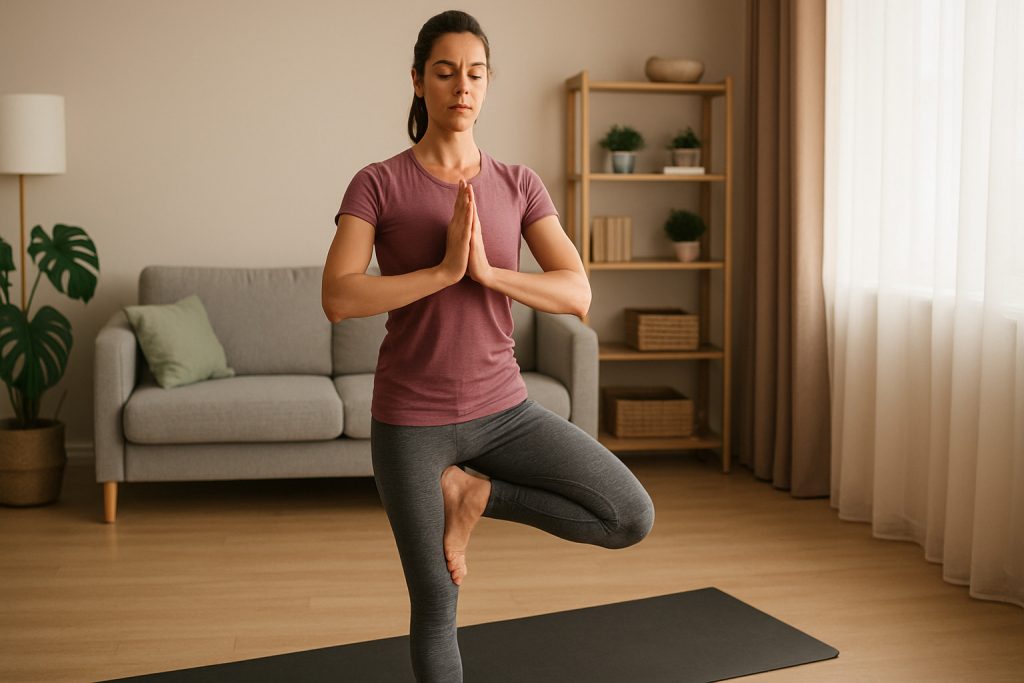
  • Tree Pose (30 sec each side)
  • Standing Figure-4 Pose (30 sec each side)
  • Plank Pose to Side Plank (30 sec each side)
  • Dolphin Plank (1 min)
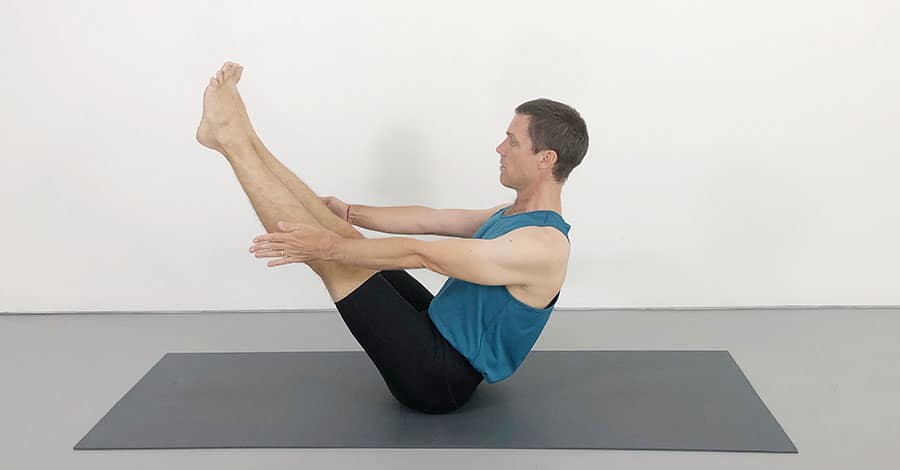
  • Boat Pose (Navasana) – 2 rounds of 30 sec holds

4. Dynamic Hip + Glute Flow (3 minutes)

  • Crescent Lunge Pulses (30 sec per side)
  • Goddess Squat with Side Bends (1 min)
  • Chair Pose to Airplane Arms (30 sec)

5. Quick Burnout (2 minutes)

  • 10 x Slow Mountain Climbers
  • 10 x Chaturanga Push-Ups
  • 30 sec High Plank Hold
  • 10 x Power Chair Pulses

Cool Down + Relaxation (5 Minutes)

Focus: Stretch, release tension, integrate benefits

  1. Seated Forward Fold – 1 min
  2. Supine Twist (both sides) – 1 min
  3. Happy Baby Pose – 1 min
  4. Legs Up the Wall – 1 min
  5. Savasana (Corpse Pose) + Deep Breathing – 1 min

Tips for an Effective Yoga Workout Routine

  • Stay consistent: 3–5 sessions per week yield results in strength and flexibility
  • Engage your core throughout every pose
  • Use your breath to guide and deepen movement
  • Focus on alignment—form is more important than depth
  • Track your progress with journaling, photos, or hold durations

Common Mistakes to Avoid

  • Rushing through transitions
  • Holding your breath during effort
  • Collapsing into joints (especially wrists and knees)
  • Practicing on an unstable surface
  • Comparing yourself to others—go at your pace

Real-Life Case Studies: Success Stories with Power Yoga

Case Study #1: Mike, 42 – Strength Coach Turned Home Yogi

“I’ve been lifting weights for over 20 years. After a shoulder injury, I started doing a 30-minute power yoga routine three times a week. At first, it felt slow—but I soon realized it was challenging in a whole new way. My mobility improved, I felt stronger in my core, and my recovery times shortened. Now I combine yoga with strength training regularly.”

Focus: Shoulder rehab, mobility, core strength
Result: Faster recovery, functional flexibility, core engagement without weights

Case Study #2: Priya, 29 – Remote Tech Professional

“Sitting all day was wrecking my posture and energy. I decided to replace my afternoon slump with a 30-minute yoga workout routine. In two weeks, my back pain reduced, and I felt more awake and productive after each session. Plus, it’s the only workout I’ve ever been able to stick with consistently.”

Focus: Desk fatigue, energy, posture
Result: Reduced back pain, increased energy, improved posture and focus

Case Study #3: Sandra, 37 – Busy Mom of Two

“Finding time to exercise was nearly impossible with young kids. I stumbled on a 30-minute power yoga video and gave it a try during naptime. It kicked my butt—but I felt amazing afterward. I now follow a yoga workout routine 4 days a week, and it’s helped me tone up, de-stress, and feel stronger than I did in my 20s.”

Focus: Weight loss, time efficiency, stress relief
Result: Fat loss, toned muscles, better sleep, lower stress

Case Study #4: David, 61 – Retired Airline Pilot

“After retiring, I wanted something low-impact but effective. Power yoga was surprisingly challenging. It improved my balance, helped me regain muscle tone, and gave me a reason to move every day. I also feel mentally sharper and more grounded.”

Focus: Active aging, balance, mobility
Result: Improved agility, mental clarity, daily structure

Case Study #5: Lila, 34 – Cyclist and Weekend Warrior

“Cycling gives me strength and endurance, but I was constantly tight and stiff. I added this yoga workout routine post-ride, and it transformed everything. My hips opened up, my back pain disappeared, and my power output actually improved.”

Focus: Flexibility, recovery
Result: Less tightness, better mobility, improved cycling performance

Case Study #6: Jake, 24 – Graduate Student Managing Anxiety

“Studying for long hours was leaving me anxious and physically drained. I started doing a power yoga routine every morning. The movement combined with breathing helped calm my mind and gave me more energy to focus. It became my anchor during stressful exam periods.”

Focus: Mental wellness, energy, structure
Result: Reduced anxiety, improved mood, better focus and energy

Case Study #7: Alina, 46 – Physical Therapist Recovering from Injury

“After my knee surgery, I needed something low-impact yet effective. A modified 30-minute yoga workout helped me build strength without strain. I now recommend it to some of my own patients as part of their rehab plan.”

Focus: Rehab-safe movement, strength without weights
Result: Strength return post-surgery, professional recommendation use

Case Study #8: Kevin, 39 – Business Traveler

“Living out of a suitcase means I can’t always get to a gym. This 30-minute yoga workout routine became my hotel-room fitness solution. It’s efficient, requires zero equipment, and keeps me fit on the road.”

Focus: Travel-friendly workouts
Result: Maintained fitness routine, no-excuse workouts, travel energy boost

These examples show the versatility and transformational power of a well-structured yoga workout routine. Whether you’re seeking recovery, weight loss, improved mobility, or mental clarity, power yoga adapts to your lifestyle and goals.

FAQs About Yoga Workout Routines

Is 30 minutes of yoga a day enough for fitness?

Yes. A consistent 30-minute yoga workout can improve strength, mobility, and cardio fitness—especially with a power yoga approach.

Can this yoga workout routine replace the gym?

For many people, yes. Power yoga offers strength, endurance, flexibility, and balance without the need for weights or machines.

Will this yoga workout routine help me lose weight?

Yes—if paired with a balanced diet and regular practice, power yoga can burn calories and support fat loss.

Do I need to be flexible to start power yoga?

Not at all. Flexibility comes with practice. Start where you are and progress safely.

Can beginners do this 30-minute yoga workout?

Yes, with modifications. Take breaks as needed, skip advanced transitions, and build up gradually.

How many calories does this routine burn?

Depending on intensity and body weight, this power yoga session can burn between 300–500 calories.

What’s the best time of day to do yoga?

Morning sessions energize; evening flows help you unwind. Choose based on your schedule and goals.

Do I need equipment for this routine?

Just a mat. Optional props like blocks or straps can support better alignment, especially for beginners.

Conclusion: A Full-Body Workout, Anywhere, Anytime

You don’t need a gym, heavy weights, or expensive equipment to get fit. With this 30-minute yoga workout routine, you can build strength, increase flexibility, boost energy, and calm your mind—all from your living room.

The key is consistency, breath awareness, and mindful effort. Over time, this routine will sculpt your body, sharpen your focus, and improve your overall fitness in ways that are both sustainable and empowering.

Ready to roll out your mat?

Try this routine today and feel stronger, more centered, and more capable in just 30 minutes a day.

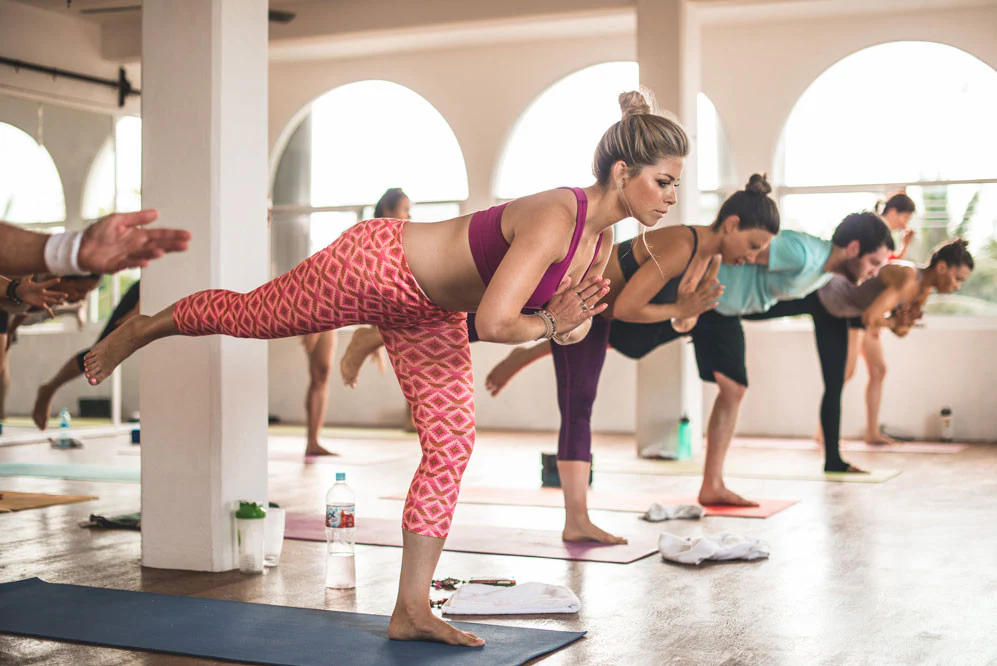
The Differences Between Power Yoga and Traditional Yoga

The Differences Between Power Yoga and Traditional Yoga

Yoga is no longer just a meditative practice reserved for monks or mystics—it’s a global fitness movement. With so many different styles out there, it’s easy to get confused. Two of the most popular are Power Yoga and Hatha Yoga. But how do they differ? And which one is right for you? In this comprehensive guide, we’ll break down the key differences between power yoga vs hatha yoga, exploring their origins, structure, intensity levels, and benefits. Whether you’re new to yoga or deciding which class to attend, this article will help you make an informed choice.

What Is Hatha Yoga?

Hatha Yoga is often referred to as traditional yoga. It emphasizes controlled movement, static poses, breathwork, and mindfulness. The term “Hatha” encompasses many physical yoga styles, but in modern studios, it typically refers to a slower-paced practice where poses are held for longer durations.

Characteristics of Hatha Yoga:

  • Slower movements
  • Poses held for 30 seconds to 1 minute
  • Emphasis on alignment and breath awareness
  • Often incorporates pranayama (breath control) and meditation
  • Accessible to all fitness levels

Goals of Hatha Yoga:

  • Improve flexibility and joint health
  • Build foundational strength
  • Calm the nervous system
  • Develop body awareness
  • Reduce stress and mental chatter

What Is Power Yoga?

Power Yoga is a dynamic, fitness-oriented style of yoga that blends elements of Vinyasa and Ashtanga with athletic movement. It was developed in the 1990s as a Western adaptation of traditional practices to meet the needs of a more active, gym-focused audience.

Characteristics of Power Yoga:

  • Fast-paced, continuous flow of poses
  • More physically demanding
  • Builds heat and cardiovascular endurance
  • Focus on strength, stamina, and sweat
  • Less focus on meditation, more on movement

Goals of Power Yoga:

  • Build lean muscle
  • Burn calories and support weight loss
  • Enhance cardiovascular fitness
  • Improve flexibility through movement
  • Increase energy and focus

Power Yoga vs Hatha Yoga: Side-by-Side Comparison

FeatureHatha YogaPower Yoga
PaceSlow to moderateFast and dynamic
IntensityGentle to moderateHigh-intensity
Pose DurationLonger holdsShorter holds, continuous movement
FocusAlignment, breath, mindfulnessStrength, stamina, calorie burn
BreathworkIntegral part of each classIntegrated but not the main focus
MeditationOften includedOften omitted or brief
Calories Burned (30 min)~120–180~250–450
AccessibilityBeginner-friendlyBest for moderate to advanced levels
Best ForStress relief, beginners, joint careFitness, weight loss, muscle tone

Key Differences Explained

1. Intensity and Movement

Hatha is calm, deliberate, and restorative. Power Yoga is sweaty, challenging, and fast-paced. If you’re looking for a workout, Power Yoga delivers. If you’re looking to stretch and relax, Hatha is ideal.

2. Purpose and Intent

Hatha Yoga aims to balance body and mind, often with a spiritual or meditative component. Power Yoga focuses more on physical transformation, endurance, and energy.

3. Flow Structure

Power Yoga often features a Vinyasa-style flow, where poses link together smoothly with breath. Hatha Yoga has more static holds, where you focus on posture, alignment, and stillness.

4. Accessibility and Adaptability

Hatha Yoga is ideal for beginners, older adults, and those recovering from injuries. Power Yoga requires a baseline level of fitness, although modifications can be made.

5. Energy Effect

Hatha Yoga is calming, often practiced in the evening or for stress management. Power Yoga is invigorating, perfect for a morning workout or energy boost.

Which Style Should You Choose?

Choose Hatha Yoga if you:

  • Are new to yoga or returning after a break
  • Have mobility restrictions or chronic pain
  • Want a slower pace with more guidance
  • Are seeking mental clarity and relaxation
  • Practice for therapeutic or meditative reasons

Choose Power Yoga if you:

  • Want to get fit, lose weight, or build muscle
  • Enjoy energetic, fast-paced workouts
  • Are already active or want a gym-style challenge
  • Prefer a more modern, physical approach
  • Need a time-efficient full-body workout

Real-Life Case Studies: Finding the Right Fit

Lena, 34 – High-Stress Marketing Manager

“I started with Hatha Yoga to help with anxiety. The slow pace and focus on breath helped me sleep better and reduced my tension headaches. It became my daily reset.”

Outcome: Reduced stress, improved sleep, better posture

Marcus, 29 – Former Athlete

“I was bored with traditional workouts and gave Power Yoga a shot. It’s intense but fun. I now do it 3 times a week, and it keeps me lean, flexible, and mentally sharp.”

Outcome: Lean muscle gain, cardio boost, improved mobility

Elaine, 50 – Teacher with Chronic Joint Pain

“Power Yoga was too fast for me. Hatha gave me the slow, gentle movement I needed. Now, I wake up and do 20 minutes of Hatha every morning. My joints feel better, and my mind is clearer.”

Outcome: Joint mobility, consistent routine, mental calm

Can You Combine Power Yoga and Hatha Yoga?

Yes! In fact, many practitioners benefit from a hybrid approach. Power Yoga can serve as your workout, while Hatha Yoga supports recovery, stress management, and flexibility.

Sample Weekly Combo:

DayPractice
MondayPower Yoga
TuesdayHatha Yoga
WednesdayPower Yoga
ThursdayRest or Meditation
FridayHatha + Pranayama
SaturdayPower Yoga
SundayGentle Hatha

FAQs about Power Yoga vs Hatha Yoga

Which is better for weight loss—Power Yoga or Hatha Yoga?

Power Yoga. It burns more calories and builds lean muscle, which helps accelerate metabolism.

Is Power Yoga safe for beginners?

Yes, with modifications and proper guidance. However, beginners may find Hatha Yoga more manageable at first.

Can Hatha Yoga build strength?

Yes. Although slower-paced, Hatha develops foundational strength, especially in the core and postural muscles.

How many times a week should I practice Power Yoga?

2–4 times per week is ideal. Be sure to allow rest days or alternate with Hatha for balance.

Can I do both Power Yoga and Hatha Yoga?

Absolutely. Many people combine both styles to achieve comprehensive fitness and mental balance.

Which yoga style is better for flexibility?

Both. Hatha targets passive flexibility through longer holds, while Power Yoga improves dynamic flexibility through movement.

Which is more spiritual—Power Yoga or Hatha Yoga?

Hatha Yoga typically integrates spiritual and meditative elements more than Power Yoga, which is more fitness-oriented.

Do I need equipment for either style of yoga?

Just a yoga mat. Optional: blocks, straps, and a bolster can support both styles, especially for beginners or deep stretches.

Conclusion: Power Yoga vs Hatha Yoga—Which One Wins?

There’s no winner in the battle between power yoga vs hatha yoga—only what’s right for you. Each style offers unique benefits:

  • Power Yoga is energizing, strength-focused, and fitness-driven.
  • Hatha Yoga is grounding, meditative, and ideal for beginners or recovery.

Whether you’re trying to burn calories or slow down a racing mind, both forms of yoga can be powerful tools for physical health and mental well-being.

Final Tip:

Try both styles for a week and observe how your body and mind respond. The best yoga routine is the one you’ll return to—again and again.

Yoga for Core Strength: The Best Moves for Abs and Stability

Yoga for Core Strength: The Best Moves for Abs and Stability

If you’re looking to sculpt your midsection, improve your posture, and enhance your overall strength—look no further than yoga for abs. Yoga isn’t just about stretching or relaxation; it’s also one of the most effective ways to develop a strong, functional core.

Unlike traditional ab workouts that isolate muscles with crunches or sit-ups, yoga engages your entire core—front, back, and sides—while also improving balance, breath control, and body awareness.

In this guide, you’ll discover how yoga builds core strength, the best poses to target your abs, and how to build a sustainable yoga practice for lasting results.

Why Yoga for Abs Works

The core is more than just your six-pack—it includes the rectus abdominis, obliques, transverse abdominis, lower back, hips, and pelvic floor. Yoga engages all these muscles through:

  • Isometric holds that build endurance
  • Dynamic movements that challenge coordination and control
  • Balance poses that require deep core engagement
  • Breath awareness that activates the diaphragm and transverse abdominis

Yoga focuses on functional strength, which means your abs are trained to stabilize your spine, protect your lower back, and improve movement in everyday life—not just look good.

Benefits of Yoga for Core Strength

Here’s what you gain from practicing yoga for abs regularly:

✅ Improved Posture

A strong core supports upright posture and relieves pressure on your spine.

✅ Better Balance and Coordination

Balance-focused poses like Boat and Side Plank engage deep stabilizers often neglected in gym routines.

✅ Reduced Risk of Injury

Strengthening the core protects your lower back and enhances movement mechanics.

✅ Enhanced Athletic Performance

Core strength powers virtually every athletic activity, from running and lifting to swimming and martial arts.

✅ Toned, Defined Abs

While yoga alone won’t “shred” your abs without proper nutrition, it contributes to lean muscle development and visible definition.

Best Yoga Poses for Abs and Stability

These yoga moves are designed to fire up your core and improve overall stability. Add them into your regular routine or build a 20–30 minute flow around them.

1. Boat Pose (Navasana)

A classic core strengthener that targets the upper and lower abs.

How to Do It:

  • Sit on the floor, knees bent
  • Lean back slightly and lift your feet
  • Extend arms forward, parallel to the floor
  • Hold for 30–60 seconds

Targets: Rectus abdominis, hip flexors, spine stabilizers

2. Plank Pose (Phalakasana)

An isometric hold that activates the entire core.

How to Do It:

  • Hands under shoulders, body in one line
  • Engage core, squeeze glutes, don’t sag
  • Hold 30–60 seconds

Variation: Side Plank (Vasisthasana) for obliques


3. Forearm Plank with Leg Lifts

Add dynamic core engagement and balance.

How to Do It:

  • From forearm plank, lift one leg at a time
  • Keep hips square, controlled motion
  • 10 reps per leg

Targets: Transverse abdominis, glutes, lower abs

4. Chair Pose with Twist (Parivrtta Utkatasana)

Twists ignite obliques and encourage spinal mobility.

How to Do It:

  • From Chair Pose, bring palms to heart
  • Twist to one side, hook elbow outside knee
  • Hold for 3–5 breaths each side

Targets: Obliques, lower back, balance

5. Dolphin Plank

A shoulder and core blaster that builds full-body control.

How to Do It:

  • Forearms on the mat, body in plank
  • Lift hips slightly, engage abs and thighs
  • Hold for 30–60 seconds

Targets: Core, shoulders, glutes

6. Locust Pose (Salabhasana)

A back-body strengthener essential for balanced core development.

How to Do It:

  • Lie on stomach, lift chest, arms, and legs off the floor
  • Engage glutes, keep neck neutral
  • Hold for 5–10 breaths

Targets: Lower back, glutes, hamstrings

7. Bird-Dog (from Tabletop)

A functional core movement for balance and spinal alignment.

How to Do It:

  • From hands and knees, extend right arm and left leg
  • Hold 5 breaths, switch sides
  • Repeat 3 rounds

Targets: Stabilizers, abs, back extensors

Sample 20-Minute Yoga for Abs Flow

Warm-Up (3 minutes)

  • Cat-Cow
  • Downward Dog
  • Low Lunge

Core Sequence (15 minutes)

  • Plank (1 min)
  • Side Plank (30 sec each)
  • Boat Pose (2 rounds of 30 sec)
  • Chair Twist (30 sec each)
  • Dolphin Plank (1 min)
  • Locust Pose (30 sec hold, 2 rounds)
  • Bird-Dog (2 rounds each side)

Cool Down (2 minutes)

  • Supine Twist
  • Happy Baby
  • Savasana

Real-Life Case Studies

Carlos, 33 – CrossFitter Needing More Control

“I used to train only with weights and had decent muscle but poor control. Adding yoga for abs helped me strengthen deep core muscles that I didn’t even know existed. It made me stronger in lifts and reduced my lower back pain.”

Natalie, 28 – Desk Worker with Poor Posture

“Slouching all day left my abs weak and my back aching. After committing to a 10-minute yoga core flow every morning, I stood taller, my pain vanished, and my abs looked more toned in just 6 weeks.”

Eleanor, 60 – Improving Balance and Core Stability

“I wasn’t chasing six-pack abs—I wanted better balance and less back pain. Yoga taught me how to move from my core. Now I feel stronger doing everyday tasks and haven’t had a back issue in over a year.”

FAQs about Yoga for Abs

Can yoga really build abs?

Yes. Yoga builds functional core strength through isometric holds and deep muscle engagement, especially in the lower abs and obliques.

Is yoga better than crunches for core strength?

Yes. Yoga works the core in a more holistic, joint-friendly way while also improving posture, flexibility, and balance.

How often should I do yoga for abs?

Aim for 3–5 sessions per week of 15–30 minutes. Consistency matters more than intensity for results.

Can beginners do yoga for core strength?

Absolutely. Many poses can be modified with props or shorter durations. Start slow and progress gradually.

Do I need to be flexible to do yoga for abs?

No. Flexibility improves over time. Core-focused poses emphasize strength and alignment more than deep stretching.

Will yoga for abs help with back pain?

Yes. A stronger core reduces pressure on the spine and supports better posture, both of which relieve back tension.

Do I need equipment for yoga abs workouts?

Just a yoga mat. Optional props like blocks or a strap can enhance comfort or support alignment.

How long until I see results?

Most people feel stronger within 2–3 weeks and notice visible core definition and posture improvements by 4–6 weeks with consistent practice.

Conclusion: Build a Strong, Stable Core with Yoga

Whether you’re looking for toned abs, better posture, or stronger back support, yoga for abs offers a sustainable, balanced approach. These poses challenge your core without straining your spine, making them ideal for long-term strength and stability.

You don’t need crunches, gym machines, or endless reps. All you need is your body, your breath, and a mat.

Ready to strengthen from the inside out?

Try this yoga for abs sequence today—and feel the difference where it matters most: your center.

Cardio Yoga Guide: Can Yoga Replace Traditional Cardio Workouts?

Cardio Yoga Guide: Can Yoga Replace Traditional Cardio Workouts?

Yoga is well-known for promoting flexibility, mental clarity, and balance—but can it also get your heart pumping like a run or HIIT session? In this cardio yoga guide, we’ll explore how specific yoga styles and sequences can deliver a full-body cardiovascular workout, and whether they can replace more traditional cardio routines.

If you’re wondering whether downward dogs and warrior flows can stand up to treadmills and spin bikes, keep reading. This guide offers a detailed look at cardio yoga, how it works, and when it’s an effective substitute for traditional cardio.

What Is Cardio Yoga?

Cardio yoga is a modern, fast-paced style of yoga that blends traditional poses with dynamic movements, faster transitions, and breath-linked flows. It’s designed to elevate your heart rate, improve oxygen circulation, and burn calories—just like conventional cardiovascular exercise.

Key Features of Cardio Yoga:

  • Rapid sequences (like Sun Salutations)
  • Continuous movement with minimal rest
  • High-energy transitions and repetitions
  • Focus on breath control and endurance
  • Total-body engagement

Unlike traditional yoga styles (like Hatha or Yin), cardio yoga feels more like a workout and often mirrors the rhythm and intensity of aerobic exercise.

Benefits of Cardio Yoga

When practiced consistently, cardio yoga can offer many of the same benefits as jogging, cycling, or aerobic fitness classes.

1. Improved Cardiovascular Health

Elevating the heart rate through consistent movement enhances circulation and strengthens the heart and lungs.

2. Calorie Burning

Depending on your body weight and session intensity, you can burn between 200–450 calories in a 30-minute cardio yoga session.

3. Enhanced Endurance

Repetitive, breath-synchronized flows build stamina and improve oxygen efficiency over time.

4. Strength + Flexibility

Cardio yoga tones muscles while increasing mobility—unlike many cardio-only routines.

5. Mental Clarity

Yoga’s breath focus and meditative elements reduce cortisol, helping balance the nervous system post-workout.

Cardio Yoga vs Traditional Cardio: What’s the Difference?

FeatureCardio YogaTraditional Cardio
Movement StyleFlowing, bodyweight-basedRepetitive (running, biking, etc.)
Equipment NeededYoga mat onlyMachines or outdoor space
Heart Rate ElevationModerate to highHigh (depends on activity)
Muscle EngagementFull-body, strength-focusedMostly legs (e.g., running/cycling)
Flexibility ComponentYesTypically no
Mind-Body ConnectionStrongMinimal
Impact LevelLow to moderateModerate to high (e.g., running)

Can Cardio Yoga Replace Traditional Cardio Workouts?

The short answer is: yes—for many people. Cardio yoga can replace traditional cardio if your primary goals are general fitness, weight management, and improved endurance.

✅ When Cardio Yoga Is a Great Substitute:

  • You want low-impact movement that’s easier on joints
  • You’re looking for a balanced workout (strength, cardio, flexibility)
  • You’re bored with repetitive cardio machines
  • You prefer mind-body exercise
  • You’re managing stress and want a gentler alternative

❌ When Traditional Cardio May Be Better:

  • You’re training for a specific endurance sport (e.g., marathon, triathlon)
  • You want maximum heart rate zones for aerobic conditioning
  • You have time constraints and need ultra-intense workouts in <20 min

Sample 30-Minute Cardio Yoga Routine

Try this flow to experience cardio yoga in action.

Total Time: 30 Minutes
Equipment: Just a mat and water bottle

Warm-Up (5 min)

  • Cat-Cow x 8
  • Downward Dog to Plank Flow x 6
  • Standing Forward Fold with Side Bends x 1 min
  • Jumping Jacks or Skater Steps x 1 min

Cardio Yoga Flow (20 min) – Repeat 2x

  • Sun Salutation B Flow (3 rounds)
  • Chair Pose to Airplane Arms x 10 reps
  • Crescent Lunge → Warrior III Transitions x 8 each side
  • Plank to Down Dog with Knee Tucks x 10 reps
  • Side Plank Twists (right & left) x 30 sec per side
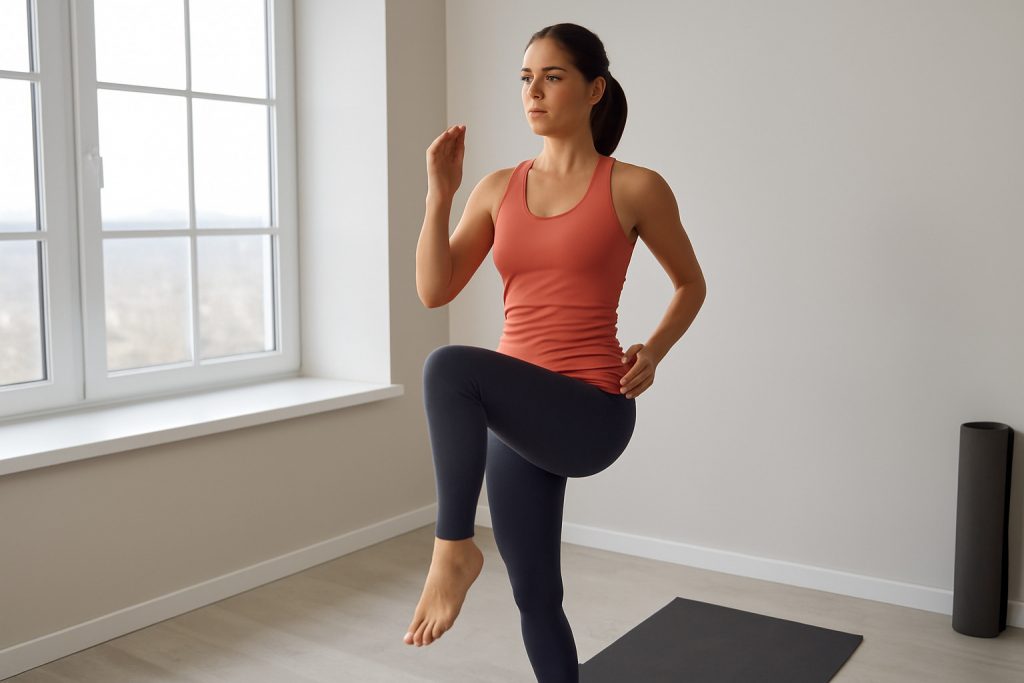
  • High Knees in Place x 1 min
  • Squat to Twisting Mountain x 10 reps

Cool Down (5 min)

  • Seated Forward Fold x 1 min
  • Supine Twist (both sides) x 1 min
  • Happy Baby x 1 min
  • Savasana with Deep Breathing x 2 min

Real-Life Cardio Yoga Case Studies

Jason, 38 – Former Runner with Knee Issues

“Years of running left my knees aching. I switched to cardio yoga and was surprised by how intense it was—without the pain. I still burn fat, stay strong, and haven’t had joint pain since.”

Result: Maintained cardio fitness with lower impact

Rina, 31 – Busy Entrepreneur

“I don’t have time for separate strength and cardio workouts. Cardio yoga helps me do both in one go. I’ve lost weight, built muscle, and feel less stressed.”

Result: Time-efficient, body-transforming solution

Karen, 62 – Looking for Gentle but Effective Fitness

“I wanted something safe, energizing, and calming. My doctor recommended yoga, and I found cardio yoga a perfect fit. It’s helped my stamina and mobility.”

Result: Sustainable workout without burnout or injury

FAQs about Cardio Yoga

Is cardio yoga good for weight loss?

Yes. When paired with proper nutrition, cardio yoga helps burn fat, build lean muscle, and boost metabolism.

Can cardio yoga improve heart health?

Absolutely. Regular cardio yoga improves circulation, lowers blood pressure, and enhances lung capacity.

Is cardio yoga beginner-friendly?

Yes—with modifications. Start slow and focus on alignment before increasing intensity.

How often should I do cardio yoga?

Aim for 3–5 sessions per week of 20–45 minutes for optimal results.

Can I combine cardio yoga with other workouts?

Yes! Many athletes use cardio yoga for active recovery or to add variety to their fitness routine.

Is cardio yoga better than running?

It depends on your goals. For joint health, full-body engagement, and stress relief—cardio yoga may be superior. For peak aerobic endurance, running is more targeted.

Do I need any equipment for Cardio Yoga?

Just a yoga mat. Optional props like blocks or resistance bands can add challenge but aren’t necessary.

How soon will I see Cardio Yoga results?

Most people feel better after a few sessions and see physical changes (toning, stamina) within 3–4 weeks of consistent practice.

Conclusion: Is Cardio Yoga Right for You?

If you’re looking for a dynamic, engaging, and low-impact workout that builds strength and boosts cardiovascular health, cardio yoga is a powerful solution. It’s versatile, requires minimal space or equipment, and offers both physical and mental benefits.

While it may not completely replace high-intensity cardio for everyone, it’s an excellent substitute—or supplement—for most people seeking well-rounded fitness.

Yoga for Flexibility and Mobility: Unlock Your Body’s Potential

Yoga for Flexibility and Mobility: Unlock Your Body’s Potential

In today’s sedentary, screen-centered world, stiffness and tightness are all too common. Whether you’re a desk worker, athlete, or someone simply looking to move better, yoga for flexibility offers a time-tested and effective solution.

Unlike static stretching routines, yoga combines breath, mindfulness, and movement to gradually lengthen muscles, lubricate joints, and improve overall mobility. But the benefits don’t stop at your hamstrings—yoga unlocks the entire kinetic chain, from your spine to your hips, shoulders, and ankles.

In this comprehensive guide, we’ll explore how yoga increases flexibility and mobility, which poses to focus on, and how to build a routine that transforms the way you move and feel—on and off the mat.

What Is Flexibility and Why Does It Matter?

Flexibility refers to the ability of a muscle or muscle group to lengthen through a range of motion. But yoga takes it a step further by improving mobility, which is the ability of a joint to move actively through that range.

🚫 Lack of Flexibility Can Lead To:

  • Tight hips and hamstrings
  • Poor posture and back pain
  • Joint restrictions and limited range of motion
  • Higher risk of injury in daily activities or workouts

✅ Improved Flexibility Can:

  • Reduce aches and tension
  • Support better posture
  • Increase joint health and resilience
  • Enhance performance in sports, weight training, or even walking

How Yoga Improves Flexibility and Mobility

1. Active Stretching vs. Passive Stretching

Unlike passive stretches where you “hang” in a position, yoga incorporates active stretching—engaging the muscles surrounding a joint to increase control and strength as flexibility increases.

2. Breath + Movement

The link between breath and movement helps release chronic muscular tension, especially in the hips, shoulders, and spine.

3. Consistency and Progression

Yoga teaches progression—gently increasing your range over time without forcing. Regular practice rewires your nervous system to allow safer, deeper mobility.

Best Yoga Poses for Flexibility and Mobility

Here are the most effective yoga poses to increase flexibility across key body areas:

For Hips:

  • Lizard Pose (Utthan Pristhasana)
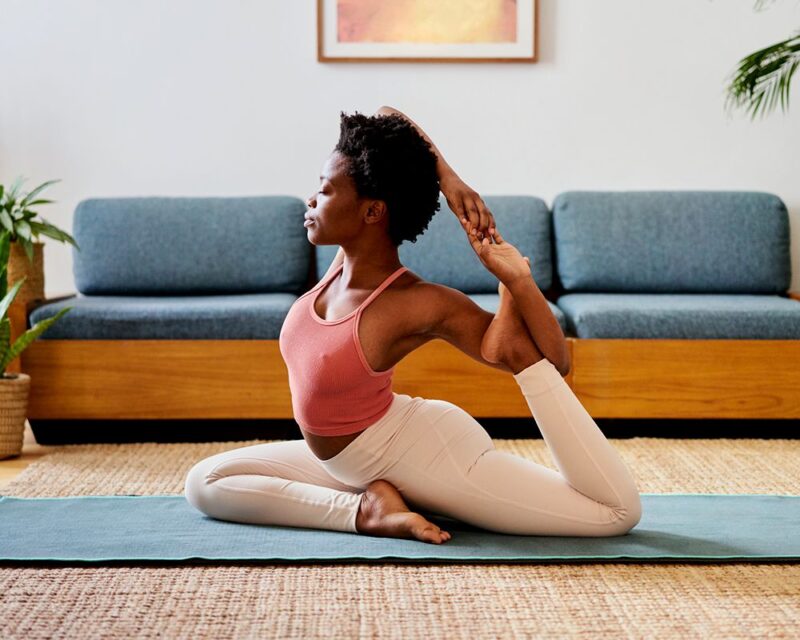
  • Pigeon Pose (Eka Pada Rajakapotasana)
  • Garland Pose (Malasana)

For Hamstrings:

  • Standing Forward Fold (Uttanasana)
  • Pyramid Pose (Parsvottanasana)
  • Seated Forward Bend (Paschimottanasana)

For Shoulders & Spine:

  • Cat-Cow Pose (Marjaryasana–Bitilasana)
  • Thread the Needle
  • Bridge Pose (Setu Bandhasana)

For Ankles & Calves:

  • Downward Dog (Adho Mukha Svanasana)
  • Chair Pose (Utkatasana) with heel lifts
  • Squat Flow

30-Minute Yoga for Flexibility Routine

Total Time: 30 minutes
Props: Mat, yoga blocks (optional)

Warm-Up (5 minutes)

  • Cat-Cow x 10
  • Downward Dog to Plank Flow
  • Seated Twist (both sides)

Core Flow (20 minutes)

  • Sun Salutation A (3 rounds)
  • Lizard Pose (1 min per side)
  • Pigeon Pose (1 min per side)
  • Standing Forward Fold (1 min)
  • Pyramid Pose (30 sec per side)
  • Thread the Needle (1 min each side)
  • Butterfly Stretch

Cool Down (5 minutes)

  • Supine Twist
  • Happy Baby
  • Savasana with slow breathing

Repeat this sequence 3–5 times per week for noticeable gains in flexibility within 3–4 weeks.

Real-Life Yoga for Flexibility Case Studies

Mei, 32 – Desk Job Stiffness Turned Into Daily Flow

“I started yoga to fix my poor posture and tight hips from sitting all day. In just a month of consistent practice, I can touch my toes again, and my lower back doesn’t hurt anymore.”

Dan, 40 – CrossFitter Who Couldn’t Squat Deeply

“Lifting was painful until I incorporated yoga for flexibility. I now squat deeper, feel stronger, and recover faster between workouts.”

Arlene, 64 – Gaining Mobility After Retirement

“I didn’t realize how stiff I had become until I tried yoga. My balance, reach, and confidence walking up stairs have all improved.”

Common Mistakes in Yoga for Flexibility

❌ Pushing Too Hard

Forcing your body into deep stretches can cause microtears or strain. Always honor your limits.

❌ Inconsistent Practice

Flexibility takes repetition over time. One session a week won’t do much.

❌ Holding the Breath

Tension lives in breath-holding. Deep, steady breathing supports tissue release.

FAQs about Yoga for flexibility

How often should I practice yoga for flexibility?

Aim for 3–5 times a week. Even 15–30 minutes daily will yield progress.

How long before I see yoga for flexibility results?

Many see improvements in 2–4 weeks with consistent practice. Full mobility gains may take several months.

Do I need to be flexible to start yoga?

No! Yoga is how you become flexible. Beginners are welcome.

What’s the best time of day to stretch with yoga?

Evening practices help release daily tension, but mornings can boost circulation and energy.

Can yoga help with chronic stiffness or old injuries?

Yes. Gentle yoga styles like Yin or Hatha support recovery, joint lubrication, and reduced stiffness.

Is yoga better than regular stretching?

Yoga is more holistic. It includes breath, balance, and strength—not just muscle lengthening.

Will yoga improve flexibility in older adults?

Absolutely. With consistency, even seniors can increase flexibility and regain mobility.

Does flexibility help with weightlifting or running?

Yes. It improves range of motion, reduces injury risk, and enhances recovery.

Is it safe to practice flexibility yoga daily?

Yes, if you’re not forcing poses. Rotate focus areas to avoid overstretching.

Can yoga improve flexibility for splits or backbends?

Yes! Specific sequences targeting hip openers and spinal extension help progress safely.

Which yoga style is best for flexibility?

Yin Yoga, Hatha, and Vinyasa all help. Yin is best for passive deep tissue release, while Vinyasa builds mobility.

What Yoga props help improve flexibility?

Yoga blocks, straps, and bolsters can support safe alignment and deepen stretches without strain.

Conclusion: Yoga Unlocks More Than Just Your Muscles

Yoga for flexibility is not about achieving the “perfect” pose. It’s about releasing tension, restoring balance, and giving your body the freedom to move with ease and strength. Over time, it can help unlock not only tight hips and hamstrings—but also a more relaxed, resilient, and capable version of you.

How Yoga Improves Balance and Coordination for Daily Fitness

How Yoga Improves Balance and Coordination for Daily Fitness

Have you ever tripped while walking, lost your footing in the shower, or struggled with posture during a workout? These common issues are often signs of poor balance and coordination—and yoga may be the answer.

Yoga for balance isn’t just about standing on one leg. It’s about training your body to move with awareness, control, and stability. Whether you’re a beginner or seasoned athlete, practicing yoga can sharpen coordination, enhance proprioception (your sense of body position), and prevent falls and injuries.

This guide breaks down the science, benefits, and best yoga poses to help you build balance for everyday life and functional fitness.

Why Balance and Coordination Matter

Balance is more than just staying upright. It involves a complex system of muscles, joints, the inner ear, and the nervous system all working together to help you move safely and efficiently.

Poor Balance Can Lead To:

  • Falls and injuries (especially in older adults)
  • Muscle compensations and joint strain
  • Reduced performance in sports or workouts
  • Poor posture and back pain

Strong Balance and Coordination Help You:

  • Walk, run, or lift weights more efficiently
  • Avoid injury during sudden movements
  • Build joint stability and muscle control
  • Age gracefully and stay independent

How Yoga Enhances Balance and Coordination

Yoga combines mindful movement, breath control, and postural awareness to train the brain and body together. Here’s how:

1. Strengthens Stabilizing Muscles

Yoga builds strength in key areas like the ankles, core, glutes, and spine—all of which are crucial for balance.

2. Improves Proprioception

Holding balancing poses improves your body’s ability to sense its position and adjust accordingly.

3. Enhances Core Control

A strong core stabilizes your center of gravity, making it easier to control your limbs during movement.

4. Builds Mental Focus

Balance requires concentration. Yoga improves mindfulness, which helps you stay present and steady—both mentally and physically.

5. Trains Single-Leg Strength

Many yoga poses isolate one side of the body, revealing imbalances and training each side independently.

Best Yoga Poses for Balance and Coordination

Here are the most effective yoga poses to improve your stability, proprioception, and muscular control.

1. Tree Pose (Vrksasana)

Builds ankle and hip stability while improving focus.

How to do it:

  • Stand tall, place foot on opposite calf or thigh
  • Engage core, keep hands in prayer or overhead
  • Hold 30–60 seconds, switch sides

2. Warrior III (Virabhadrasana III)

Strengthens legs, core, and improves single-leg balance.

How to do it:

  • From standing, hinge forward and lift one leg behind
  • Arms reach forward or back
  • Keep hips square, hold 30 seconds per side

3. Half Moon (Ardha Chandrasana)

Great for dynamic balance and core activation.

How to do it:

  • From Triangle Pose, shift weight to front foot
  • Lift back leg and reach top arm up
  • Use a block under the hand if needed

4. Chair Pose with Heel Lifts (Utkatasana Variation)

Improves ankle mobility and challenges balance under fatigue.

How to do it:

  • From Chair Pose, lift heels off floor
  • Hold for 5–10 breaths, repeat 3 times

5. Eagle Pose (Garudasana)

Challenges balance, focus, and flexibility in a tight stance.

How to do it:

  • Wrap one leg over the other, cross arms
  • Sink into a one-legged squat
  • Hold 30 seconds per side

6. Boat Pose (Navasana)

Trains core stability and spine alignment.

How to do it:

  • Sit, lift legs to 45° angle, arms parallel to floor
  • Engage abs, keep spine long
  • Hold 30–60 seconds

Sample 20-Minute Yoga for Balance Routine

Use this as a go-to flow 3–4 times a week.

Warm-Up (5 min)

  • Cat-Cow x 10
  • Downward Dog x 1 min
  • Standing Forward Fold
  • Sun Salutation A x 2 rounds

Main Flow (10–12 min)

  • Tree Pose x 30 sec each side
  • Warrior III x 30 sec each side
  • Chair Pose with Heel Lifts x 3 reps
  • Eagle Pose x 30 sec each side
  • Half Moon Pose x 30 sec each side
  • Boat Pose x 30–60 sec

Cool Down (3–5 min)

  • Seated Twist
  • Supine Figure Four
  • Savasana with Breath Focus

Real-Life Case Studies

Andrew, 35 – Tech Professional

“I didn’t realize how poor my balance was until yoga made me aware of it. After a few weeks of practice, I’m more stable during workouts and even feel more grounded during long meetings.”

Results: Improved core control and standing posture

Sandra, 67 – Retired Teacher

“I started yoga after a minor fall. Tree Pose felt impossible at first, but now I can hold it confidently. I feel more secure walking and haven’t had a single trip-up since.”

Results: Restored stability and reduced fall risk

Leo, 29 – Weightlifter

“Adding yoga helped with my coordination during squats and lunges. My single-leg control has skyrocketed, and I feel more aligned under heavy loads.”

Results: Balanced strength and injury prevention

FAQs about yoga for balance

Can yoga really improve balance?

Yes. Yoga strengthens key stabilizers and improves proprioception, both essential for better balance.

Is yoga for balance good for older adults?

Absolutely. It’s low-impact and helps prevent falls while improving joint stability and body awareness.

How long until I see results from yoga for balance?

Most practitioners feel improvement within 2–4 weeks of consistent practice.

Which yoga poses are easiest for beginners to start with?

Tree Pose, Warrior II, and Chair Pose are beginner-friendly and effective.

Can yoga for balance help with sports performance?

Yes. It improves coordination, joint control, and stability—all crucial for athletic efficiency and injury prevention.

How often should I practice yoga to improve balance?

Aim for at least 3 sessions per week. Even 10–15 minutes daily can be beneficial.

Is balance training safe if I have knee or ankle problems?

Yes, but start with modified poses and use a wall or chair for support.

Does yoga improve core strength too?

Yes. Many balance poses require significant core engagement for stability.

Can yoga help with balance during pregnancy?

Yes, with modifications. Prenatal yoga enhances stability and body awareness safely.

Do I need equipment to practice yoga for balance?

A yoga mat is enough. Blocks or a wall can offer support for challenging poses.

Can yoga improve coordination for dancing or martial arts?

Yes. The controlled movement and mind-body connection in yoga enhance coordination across all physical activities.

What if I can’t balance on one foot yet?

Start near a wall, build ankle strength, and progress gradually. Everyone improves with time.

Conclusion: Find Your Balance—On and Off the Mat

Yoga for balance is about much more than physical poise. It cultivates confidence, calmness, and body control. Whether you’re avoiding a fall, chasing athletic goals, or simply trying to move more gracefully, a consistent yoga practice can unlock lasting improvements in how you feel and function every day.

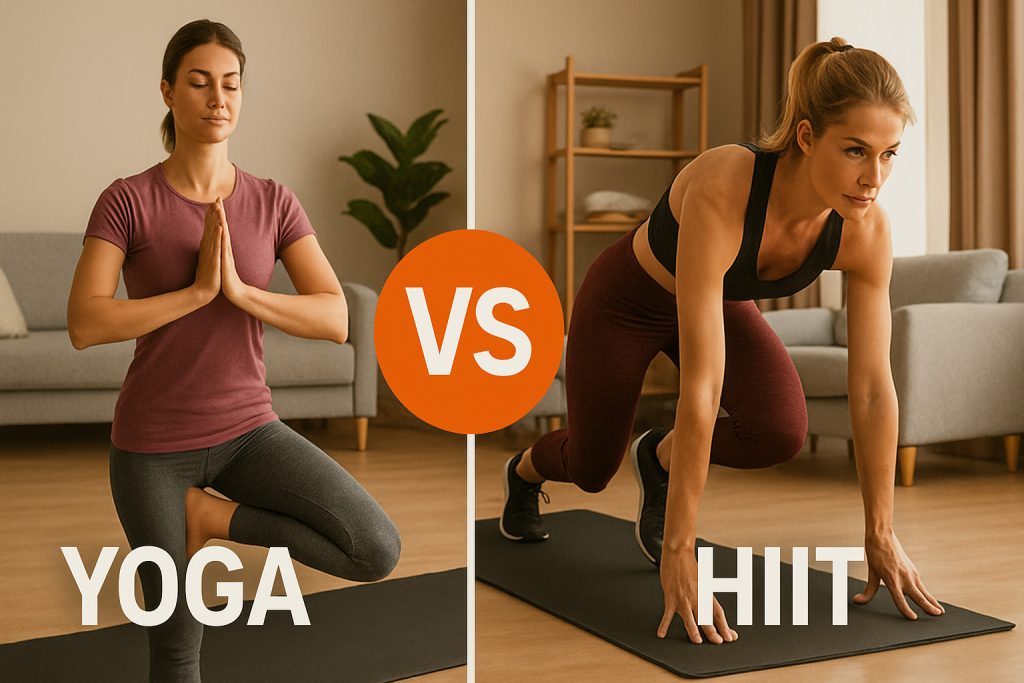
Yoga vs HIIT: Which One Is Best for Your Fitness Goals?

Yoga vs HIIT: Which One Is Best for Your Fitness Goals?

Fitness trends come and go, but two popular approaches—yoga and HIIT (High-Intensity Interval Training)—have stood the test of time. Each offers powerful benefits, but they serve different purposes and appeal to different people. Whether you’re looking to lose weight, gain strength, manage stress, or boost endurance, knowing how yoga vs HIIT compare will help you make smarter decisions for your health.

This in-depth guide explores the pros, cons, benefits, and ideal use cases of each training method, so you can choose what’s best—or learn how to combine them effectively.

What Is Yoga?

Yoga is a centuries-old mind-body discipline that combines movement, breath control, and meditation. There are many styles, from slow-paced restorative practices to fast-flowing power yoga.

Key Characteristics of Yoga:

  • Low to moderate intensity
  • Focus on breath and alignment
  • Builds flexibility, balance, and core strength
  • Improves posture and body awareness
  • Often includes mindfulness and relaxation

Popular styles include:

  • Hatha – gentle, foundational poses
  • Vinyasa/Power Yoga – dynamic and strength-focused
  • Yin/Restorative – slow, deep tissue release
  • Ashtanga – structured and athletic sequences

What Is HIIT?

HIIT (High-Intensity Interval Training) alternates bursts of high-effort movement with short recovery periods. Think jump squats, burpees, sprints, or kettlebell swings.

Key Characteristics of HIIT:

  • High intensity, short duration
  • Combines cardio and resistance work
  • Efficient calorie burn in less time
  • Promotes metabolic and cardiovascular conditioning
  • Minimal rest between intervals

A typical HIIT session may last just 20–30 minutes but can be more taxing than an hour-long moderate workout.

Yoga vs HIIT: Key Comparison Table

FeatureYogaHIIT
IntensityLow to moderateHigh
Duration30–60+ minutes15–30 minutes
Calories Burned (30 min)120–250 (style dependent)250–500+
Main BenefitsFlexibility, balance, stress reliefFat loss, strength, endurance
Impact LevelLowModerate to high
Best ForStress management, joint healthWeight loss, fitness conditioning
Equipment NeededMat (optional blocks/strap)Often bodyweight, may include gear
Mental Health SupportHigh (mindfulness + breathwork)Moderate (endorphin release)

Benefits of Yoga

Improves Flexibility & Joint Health

Regular yoga practice improves range of motion, reduces stiffness, and prevents injuries.

Enhances Balance & Stability

Great for older adults or athletes needing body control and awareness.

Supports Mental Well-being

Yoga is proven to lower cortisol and support anxiety and depression management.

Builds Functional Strength

Power yoga and poses like Chaturanga build muscle using bodyweight.

Ideal for Active Recovery

Helps reduce soreness and improves circulation between high-impact workouts.

Benefits of HIIT

Burns Maximum Calories in Minimal Time

HIIT continues to burn calories post-workout due to EPOC (Excess Post-Exercise Oxygen Consumption).

Builds Explosive Strength & Cardio Endurance

Ideal for athletes, runners, and those wanting a total-body challenge.

Supports Fat Loss

Short, intense sessions are extremely effective for fat-burning while preserving muscle.

Time-Efficient

Even a 15-minute session can be as effective as a longer, moderate workout.

Can Be Done Anywhere

Bodyweight-only HIIT workouts require zero equipment and little space.

Drawbacks of Each

❌ Yoga Limitations:

  • May not raise heart rate enough for cardiovascular conditioning
  • Slower physical transformation for goals like fat loss
  • Requires consistency and patience to see flexibility gains

❌ HIIT Limitations:

  • Not ideal for people with joint issues or heart problems
  • Can lead to overtraining or injury if done excessively
  • May cause burnout without adequate recovery

Which Is Better for Your Fitness Goals?

Here’s how yoga vs HIIT perform depending on your specific fitness goal:

For Weight Loss

Winner: HIIT
You’ll burn more calories faster and elevate metabolism for hours post-workout.

Tip: Combine HIIT 3x/week with yoga 2x/week to boost fat loss and recovery.

For Stress Relief & Mental Health

Winner: Yoga
Yoga’s focus on breath, mindfulness, and nervous system regulation is unmatched.

For Strength

Draw: Both Work

  • HIIT builds explosive strength and muscle endurance
  • Power yoga builds lean muscle and joint strength over time

For Flexibility & Mobility

Winner: Yoga
Yoga wins hands-down here—HIIT doesn’t focus on joint mobility.

For Cardiovascular Endurance

Winner: HIIT
Cardio gains are significantly faster with HIIT-style training.

For Injury Prevention & Longevity

Winner: Yoga
Yoga supports long-term movement health, joint care, and posture correction.

How to Combine Yoga and HIIT

You don’t have to choose! Many fitness experts recommend combining both for a balanced routine.

Weekly Sample Routine:

  • Monday – HIIT (20–30 mins)
  • Tuesday – Yoga (30–45 mins Vinyasa)
  • Wednesday – Rest or Light Walk
  • Thursday – HIIT
  • Friday – Yoga (Yin or Hatha)
  • Saturday – HIIT
  • Sunday – Restorative Yoga or mobility work

Yoga supports recovery and injury prevention, while HIIT delivers metabolic firepower.

Yoga vs HIIT Real-Life Case Studies

Allison, 28 – Stressed Marketing Manager

“I started with HIIT to lose weight, but I burned out fast. Adding yoga 3x a week helped me manage stress and actually stick to a routine. Now I feel stronger and more centered.”

Marcus, 35 – Fitness Enthusiast

“I lift and do HIIT regularly, but my mobility was awful. Yoga helped me fix my posture, reduce injuries, and recover faster. I now do both, and I’ve never felt better.”

Teresa, 60 – Active Retiree

“HIIT was too intense for my joints. I’ve switched to yoga and gentle bodyweight intervals. I’ve maintained my weight, improved balance, and feel calmer.”

FAQs about Yoga vs HIIT

Which burns more calories: yoga or HIIT?

HIIT burns significantly more calories in a shorter time, especially for fat loss.

Is yoga or HIIT better for beginners?

Yoga is gentler and easier to start. HIIT can be intense, so beginners should ease in or combine both.

Can I do yoga and HIIT on the same day?

Yes! Yoga before HIIT can be a warm-up; afterward, it supports recovery.

Will yoga help me tone up?

Yes. Styles like power yoga build lean muscle and increase definition over time.

Does HIIT help with flexibility?

Not directly. HIIT builds strength and endurance but lacks mobility work—yoga fills that gap.

Yoga vs HIIT : Which is better for mental health?

Yoga offers greater mental health benefits due to mindfulness and nervous system regulation.

Can HIIT be dangerous?

If overdone or performed with poor form, HIIT increases the risk of injury and overtraining.

What if I have joint pain?

Yoga is a better starting point. Choose low-impact HIIT modifications later if cleared by a doctor.

How many times a week should I do each?

  • HIIT: 2–4 times/week
  • Yoga: 3–6 times/week depending on intensity

Is yoga or HIIT better for older adults?

Yoga is safer and more sustainable for older adults, especially for mobility and fall prevention.

Can I build muscle with yoga alone?

Yes, especially with power or ashtanga yoga. But gains are slower than with HIIT or resistance training.

What’s the best combination of yoga and HIIT?

Alternate days or follow HIIT with a short yoga cool-down. Prioritize rest and listen to your body.

Conclusion: Which One Wins—Yoga or HIIT?

There’s no one-size-fits-all answer in the yoga vs HIIT debate. Each style brings unique advantages depending on your goals, lifestyle, and fitness level.

  • Choose HIIT if you’re short on time and want fast results for fat loss and endurance.
  • Choose Yoga if you need flexibility, stress relief, or joint-friendly movement.
  • Combine Both for the ultimate fitness formula—strength, balance, flexibility, and mental clarity.

Top 10 Yoga Workouts for Busy Professionals

Top 10 Yoga Workouts for Busy Professionals

In today’s fast-paced world, finding time for fitness can be a challenge. If your calendar is filled with meetings, deadlines, or family commitments, squeezing in a gym session might feel impossible. That’s where yoga for busy people shines—offering quick, effective, and calming workouts that restore energy, reduce stress, and improve flexibility, all in under 30 minutes.

This guide is designed specifically for working professionals, entrepreneurs, parents, and anyone looking to stay active without sacrificing productivity.

Why Yoga Is Perfect for Busy People

Yoga offers a unique blend of physical, mental, and emotional benefits—without requiring special equipment or a long commute to the gym.

✅ Benefits of Yoga for Busy Lifestyles:

  • Time-efficient: Effective routines in as little as 10–30 minutes
  • Low barrier to entry: All you need is a mat and some space
  • Decreases stress: Reduces cortisol and mental fatigue
  • Improves posture: Especially important for desk-bound workers
  • Increases focus and productivity
  • Boosts energy without caffeine or sugar

How to Fit Yoga Into a Busy Schedule

Even the most hectic days have hidden time windows for a yoga session. Try these strategies:

  • Morning energy boost: 10-minute Sun Salutation series
  • Midday desk stretch: Seated yoga for spine and shoulders
  • Post-work decompression: 15-minute gentle flow to wind down
  • Evening routine: 5–10 minutes of Yin yoga before bed

Remember: You don’t need 60 minutes to experience yoga’s benefits—consistency is more important than duration.

Top 10 Yoga Workouts for Busy Professionals

These routines are chosen for their simplicity, efficiency, and effectiveness. Each workout ranges from 10 to 30 minutes and targets specific needs of a busy lifestyle.

1. 10-Minute Morning Energizer Flow

Time: 10 minutes

Perfect to wake up your body and clear your mind before work.

Includes:

  • Sun Salutations A & B
  • Warrior I → Warrior II transitions
  • Seated Twist
  • Breath of Fire for energy

2. 15-Minute Desk Yoga Routine

Time: 15 minutes

Ideal for midday relief from desk strain and poor posture.

Includes:

  • Seated Cat-Cow
  • Eagle Arms Stretch
  • Seated Forward Fold
  • Neck rolls & shoulder shrugs
  • Wrist circles

3. 20-Minute Focus & Productivity Flow

Time: 20 minutes

Combines breathwork and movement to improve mental clarity.

Includes:

  • Standing Forward Fold
  • Tree Pose
  • Warrior III
  • Alternate Nostril Breathing (Nadi Shodhana)

4. 25-Minute Power Yoga for Strength

Time: 25 minutes

Builds core and upper-body strength without weights.

Includes:

  • Plank variations
  • Chaturanga push-ups
  • Boat Pose
  • Crescent Lunge to Revolved Chair

5. 15-Minute Lunchtime Stretch & Reset

Time: 15 minutes

Quick flow to release tension and return to work refreshed.

Includes:

  • Downward Dog
  • Triangle Pose
  • Half Splits
  • Reclined Spinal Twist

6. 30-Minute Full-Body Mobility Flow

Time: 30 minutes

Great for professionals who sit most of the day.

Includes:

  • Cat-Cow
  • Pigeon Pose
  • Bridge Pose
  • Thread the Needle

7. 12-Minute Core Stability Sequence

Time: 12 minutes

Targets abs and improves posture for better work performance.

Includes:

  • Boat Pose
  • Forearm Plank
  • Side Plank Dips
  • Bird-Dog Pose

8. 20-Minute Evening Stress Release Flow

Time: 20 minutes

Releases accumulated tension after a long day.

Includes:

  • Child’s Pose
  • Legs-Up-the-Wall
  • Reclined Twist
  • Alternate Nostril Breathing

9. 10-Minute Standing Yoga (No Mat Needed)

Time: 10 minutes

Great for small spaces—ideal during travel or hotel stays.

Includes:

  • Mountain Pose
  • Standing Side Bend
  • Chair Pose
  • Eagle Arms

10. 5-Minute Pre-Sleep Wind-Down Flow

Time: 5 minutes

Promotes better sleep and mental calm.

Includes:

  • Reclined Bound Angle
  • Happy Baby
  • Seated Forward Fold
  • Slow, mindful breathing

Real-Life Case Studies

Ethan, 42 – Lawyer

“I started doing 15 minutes of yoga before court prep. My stress levels dropped, and I noticed fewer backaches.”

Leila, 35 – Marketing Executive

“My calendar is packed, but a 10-minute desk yoga video at lunch changed everything. I’m sharper, calmer, and no longer need a second coffee.”

Ravi, 38 – Work-from-home Dad

“I use the standing yoga sequence while watching the kids. It keeps me moving without needing a full gym setup.”

Tips for Sticking to a Yoga Routine (Even When You’re Busy)

  • Set calendar reminders for morning or evening sessions
  • Use YouTube or yoga apps for guided flows
  • Create a designated yoga corner at home or work
  • Start small—even 5 minutes can change your day
  • Link yoga to another habit, like brushing your teeth or brewing coffee

FAQs – Yoga for busy people

Is yoga effective if I only do 10–15 minutes per day?

Yes! Short, consistent sessions are better than long but infrequent ones.

What’s the best time for busy people to practice yoga?

Early morning or right after work are best—but anytime you can be consistent works.

Do I need to change clothes for quick yoga?

Not always. Gentle or standing routines can be done in work attire.

Can I do yoga at my desk?

Yes! Seated yoga stretches can relieve back, neck, and wrist tension without leaving your chair.

Is yoga good for energy or relaxation?

Both. Energizing flows boost focus; restorative poses calm the nervous system.

Will I lose weight doing short yoga workouts?

With consistency and combined with a healthy diet, yoga can support weight loss—even in short sessions.

Can beginners do these routines?

Yes. All listed workouts are beginner-friendly, and most have built-in modifications.

What type of yoga is best for busy professionals?

Vinyasa for energy and strength; Yin or Restorative for stress relief and relaxation.

Is it okay to break yoga into shorter segments?

Absolutely. Two 10-minute sessions daily are just as effective as one longer session.

Can I use yoga to reduce work stress?

Yes. Yoga reduces cortisol and anxiety and improves emotional regulation.

Do I need props or special equipment?

No. Most routines only need a mat. A block or strap can help but isn’t required.

How quickly will I feel benefits?

Many people report feeling better—more focused, calmer, less tense—after just one session.

Conclusion: Stay Fit, Even When Life Gets Hectic

Busy doesn’t have to mean burnt out. With yoga for busy people, you can regain control over your health, posture, energy, and peace of mind—without adding stress to your schedule.

By choosing short, focused workouts like the ones above, you’re investing in your wellness and productivity, one mindful breath at a time.

Yoga for Recovery: Why Every Workout Routine Needs It

Yoga Recovery: Why Every Workout Routine Needs It

Whether you lift weights, run marathons, play sports, or do HIIT, your body needs time to heal, repair, and grow stronger. Recovery isn’t just about rest—it’s about active recovery, and that’s where yoga for recovery shines.

Yoga promotes muscle repair, increases circulation, reduces soreness, and resets the nervous system. It’s more than stretching—it’s a complete recovery tool that blends mobility, breath, and mindfulness.

This article explores why recovery yoga is vital for athletes and fitness enthusiasts alike, how it works, and the best routines to include in your week.

What Is Recovery Yoga?

Recovery yoga refers to low-intensity yoga sessions that support the body’s natural healing processes after intense physical activity. It combines gentle movement, breathwork, and long-held stretches to release tight muscles, calm the nervous system, and restore energy.

Recovery Yoga Includes:

  • Gentle flows or static poses (e.g., Yin or Restorative yoga)
  • Emphasis on breathing and slow movement
  • Stretches that target common tight areas: hips, hamstrings, back, shoulders
  • Supportive props (bolsters, blocks, blankets) to reduce strain

Why Recovery Is Crucial for Fitness Progress

Your body improves during recovery—not during the workout itself. Overtraining without proper recovery leads to:

  • Muscle fatigue and breakdown
  • Poor performance
  • Higher risk of injury
  • Sleep disruptions and hormonal imbalances
  • Mental burnout

Recovery Allows:

  • Muscle fiber repair and rebuilding
  • Inflammation reduction
  • Nervous system reset (especially parasympathetic activation)
  • Mental clarity and reduced stress hormones (like cortisol)

How Yoga Aids Recovery

✅ 1. Improves Circulation

Yoga poses increase blood flow to tired muscles, delivering oxygen and nutrients that help reduce soreness and accelerate healing.

✅ 2. Enhances Lymphatic Drainage

Gentle twisting and stretching help flush toxins and reduce inflammation post-exercise.

✅ 3. Reduces Muscle Tension

Yoga lengthens shortened, tight muscles—especially after lifting, running, or sitting for long periods.

✅ 4. Calms the Nervous System

Breathwork (pranayama) and restorative postures activate the parasympathetic system—lowering heart rate and promoting deep recovery.

✅ 5. Improves Flexibility and Joint Health

Stretching through yoga keeps connective tissues supple and joints mobile, preventing stiffness from repetitive workouts.

Best Yoga Styles for Recovery

Not all yoga styles are suitable for recovery. Focus on gentle, low-intensity practices.

Yin Yoga

  • Long-held, passive poses
  • Targets fascia and connective tissue
  • Improves deep flexibility

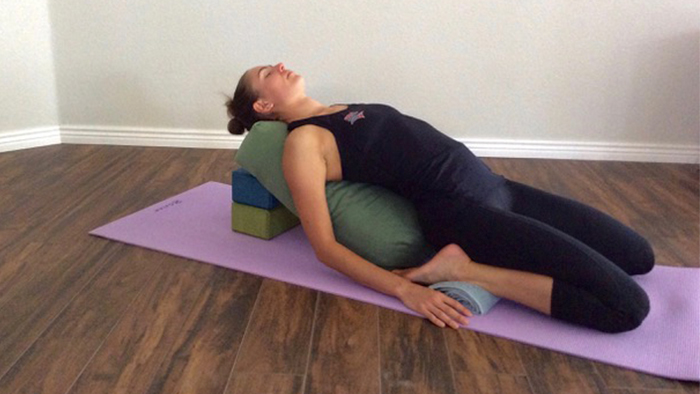
Restorative Yoga

  • Uses props for total support
  • Encourages complete relaxation
  • Ideal for rest days or evening wind-down

Hatha Yoga (Gentle)

  • Slow-paced with basic poses
  • Builds mobility and awareness
  • Great for beginners and active recovery

20-Minute Recovery Yoga Flow (Post-Workout)

Try this 20-minute flow after strength training, cardio, or intense sports sessions.

Warm-Up (3–5 mins)

  • Cat-Cow Pose – 1 min
  • Child’s Pose – 1 min
  • Seated Forward Fold – 1–2 min

Main Sequence (12–15 mins)

  • Pigeon Pose – 2 min per side
  • Supine Figure Four Stretch – 1–2 min per side
  • Thread the Needle – 1 min per side
  • Supported Bridge Pose – 3 min
  • Happy Baby – 1 min
  • Legs-Up-the-Wall – 5 min

Hold each pose with deep, slow breathing to maximize relaxation and tissue recovery.

When to Use Yoga for Recovery

Yoga can be part of your weekly workout schedule in many ways:

DayActivityType of Yoga for Recovery
MondayHIIT / Strength TrainingYin Yoga (20–30 mins)
WednesdayCardio or RunHatha Yoga (gentle, 30 mins)
FridayWeight LiftingRestorative Yoga (evening)
SundayActive Recovery / Rest DayLong Yin Session (45 mins)

Even 10 minutes of focused recovery yoga daily can improve how you feel and perform.

Real-Life Yoga for Recovery Case Studies

Jason, 34 – CrossFit Competitor

“Before yoga, I was always sore and tight. Adding recovery yoga twice a week reduced my injury risk and helped me hit new PRs faster.”

Sara, 41 – Marathon Runner

“My hips and hamstrings were chronically tight. Yin yoga became my post-run ritual. It’s now essential to my training.”

Miguel, 29 – Weekend Warrior

“I do a lot of pickup basketball and bootcamps. Yoga used to feel boring—until I realized how much it helps me bounce back.”

FAQs about yoga for recovery

How often should I do yoga for recovery?

2–3 times per week is ideal, especially after intense workouts or on rest days.

How long should a recovery yoga session be?

Even 10–20 minutes can be effective. Longer sessions (30–60 min) offer deeper benefits.

Is yoga better than stretching alone for recovery?

Yes. Yoga integrates breath, mindfulness, and full-body mobility, which enhances recovery more holistically.

Can beginners do recovery yoga?

Absolutely. Most recovery poses are gentle and accessible for all levels.

Is yoga for recovery good after strength training?

Yes. It helps reduce tightness in muscles like hamstrings, hips, and chest while supporting muscle growth.

Does yoga help with delayed onset muscle soreness (DOMS)?

Yes. Yoga boosts circulation and mobility, helping reduce post-exercise soreness.

Can yoga help prevent injuries?

Yes. It improves mobility, corrects imbalances, and supports joint stability.

Should I do recovery yoga on my rest days?

Yes. Active recovery promotes healing and prevents stiffness.

Will yoga for recovery affect my performance?

Yes—positively. It enhances performance by reducing fatigue and improving range of motion.

What’s the best time of day to do yoga for recovery?

Evenings are great to wind down. Post-workout sessions are effective within 2–3 hours of training.

Can yoga for recovery help with sleep?

Yes. Slower styles like Yin or Restorative calm the nervous system and improve sleep quality.

Do I need props for recovery yoga?

Not required, but props (blocks, bolsters, straps) can enhance comfort and support.

Conclusion: Make Yoga Your Recovery Secret Weapon

If you’re training hard, you must recover smart—and yoga is the perfect tool. Yoga for recovery isn’t just gentle stretching; it’s a science-backed way to repair muscles, prevent injury, and stay mobile for life.

Whether you’re a weekend warrior, gym-goer, runner, or athlete, incorporating yoga into your weekly plan can be the difference between burnout and breakthrough.

Ready to feel looser, stronger, and more recovered—every week?

Add yoga for recovery to your fitness toolkit and experience the difference it makes for your body and mind.

Morning Yoga Routine to Kickstart Your Fitness Day

Morning Yoga Routine to Kickstart Your Fitness Day

The way you start your morning can set the tone for the entire day—mentally, physically, and emotionally. A morning yoga routine is one of the most powerful, natural ways to awaken your body, sharpen your mind, and set a positive mood for the day ahead.

Unlike high-intensity workouts that can sometimes feel draining first thing in the morning, yoga wakes up your body with mindful movement, deep breathing, and gentle stretches. This prepares your muscles, joints, and nervous system for whatever’s on your schedule—whether it’s a day at the office or an intense gym session.

In this guide, we’ll explore why a morning yoga routine is so effective, how to create one, real-life examples of success, and the best sequences to follow for long-lasting benefits.

Why a Morning Yoga Routine Works Wonders

1. Boosts Energy Levels Naturally

Instead of relying on coffee alone, yoga stimulates circulation, oxygenates the brain, and activates your muscles, giving you a natural energy lift.

2. Improves Focus and Mental Clarity

Morning yoga encourages mindfulness and present-moment awareness, which can reduce morning brain fog and improve productivity.

3. Prepares the Body for Physical Activity

Gentle stretching and mobility work loosen up stiff joints and tight muscles from sleep, reducing the risk of injury during your workouts or daily activities.

4. Supports a Positive Mood

Yoga releases endorphins, regulates cortisol, and increases serotonin—helping you start the day happier and calmer.

The Science Behind Morning Yoga

Morning yoga works because it aligns circadian rhythms with movement and activates the parasympathetic nervous system through breathing. This unique combination:

  • Reduces stress hormones
  • Increases alertness naturally
  • Promotes flexibility and mobility
  • Enhances cardiovascular and respiratory efficiency

Studies have shown that light to moderate morning exercise can improve reaction time, focus, and mood for up to 8 hours afterward.

How to Create the Perfect Morning Yoga Routine

Step 1: Choose Your Duration

  • 10 minutes: Quick wake-up flow
  • 20–30 minutes: Balanced session for flexibility, strength, and focus
  • 45 minutes: Full practice including breathwork, meditation, and deep stretches

Step 2: Pick Your Focus

  • Energy boost (dynamic flow)
  • Flexibility and mobility
  • Stress reduction and grounding

Step 3: Include Key Elements

✅ Warm-up (gentle stretches)
✅ Flow sequence (dynamic poses)
✅ Static holds (to deepen flexibility)
✅ Breathwork (to calm or energize)
✅ Short meditation or affirmation

20-Minute Morning Yoga Routine for Fitness & Energy

Follow this step-by-step sequence for a well-rounded morning yoga routine:

Warm-Up (3–4 minutes)

  1. Cat-Cow Pose (Marjaryasana/Bitilasana) – 1 min
    Loosens the spine and awakens back muscles.
  2. Seated Side Stretch – 30 sec each side
    Opens ribs and improves breathing.
  3. Neck Rolls – 1 min
    Releases tension in neck and shoulders.

Energizing Flow (10–12 minutes)

  1. Mountain Pose (Tadasana) – 30 sec
    Center yourself with deep breathing.
  2. Sun Salutation A (Surya Namaskar A) – 3 rounds
    Boosts circulation and warms up the entire body.
  3. Warrior I (Virabhadrasana I) – 30 sec per side
    Builds lower body strength and balance.
  4. Warrior II (Virabhadrasana II) – 30 sec per side
    Improves stability and hip opening.
  5. Triangle Pose (Trikonasana) – 30 sec per side
    Stretches hamstrings, calves, and obliques.

Flexibility & Mobility (4 minutes)

  1. Low Lunge with Side Stretch – 30 sec per side
    Opens hips and stretches quads.
  2. Seated Forward Fold (Paschimottanasana) – 1 min
    Lengthens the spine and hamstrings.
  3. Happy Baby Pose (Ananda Balasana) – 1 min
    Relaxes lower back and hips.

Breathwork & Closing (2–3 minutes)

  • Alternate Nostril Breathing (Nadi Shodhana) – 1 min
    Balances both hemispheres of the brain.
  • Affirmation Meditation – 1–2 min
    Example: “Today, I move with strength, clarity, and purpose.”

Tips to Make Morning Yoga a Habit

  • Lay out your mat the night before to reduce resistance.
  • Avoid checking your phone until after practice to stay focused.
  • Pair it with a morning ritual like lemon water or journaling.
  • Start small—5–10 minutes daily—and increase over time.

Real-Life Case Studies

Emily, 32 – Marketing Manager

“I started a 15-minute morning yoga routine because I felt sluggish in the mornings. Now, I arrive at work energized and more focused.”

Raj, 45 – Fitness Enthusiast

“I used to skip stretching before my workouts. Doing yoga first thing improved my flexibility and reduced my risk of strains.”

Sophie, 27 – Personal Trainer

“I teach clients early, and I found morning yoga centers me before long days. My energy stays consistent until evening.”

FAQs About Morning Yoga Routine

How long should a morning yoga routine be?

Anywhere from 10–30 minutes is effective, depending on your schedule.

Is it okay to do yoga on an empty stomach in the morning?

Yes. Yoga is best practiced before eating, but light hydration is recommended.

Can morning yoga replace my workout?

It depends on your fitness goals. Yoga can be a complete workout if you include strength-based poses.

What’s the best type of yoga for mornings?

Vinyasa or Hatha flows are energizing, while gentle stretches work for a calmer start.

Do I need yoga props for a morning routine?

Not necessarily, but blocks and straps can help with flexibility.

Can beginners do morning yoga?

Absolutely. Start with simple poses and gradually increase intensity.

Will morning yoga help me lose weight?

It can support weight loss by boosting metabolism and encouraging healthy habits.

How soon after waking should I do yoga?

Within 30 minutes of waking is ideal for energizing benefits.

Should I warm up before morning yoga?

Yoga often includes its own warm-up, but gentle stretches beforehand are fine.

Is it better to do yoga in the morning or evening?

Both have benefits—mornings energize, evenings relax. Choose what fits your lifestyle.

Can I do morning yoga every day?

Yes. Just vary the intensity to avoid overstraining muscles.

How soon will I feel results from morning yoga?

Some benefits are immediate (energy, mood), while flexibility and strength improve within weeks.

Conclusion: Wake Up Your Body & Mind Every Morning

A morning yoga routine is more than just exercise—it’s a daily practice of self-care, mindfulness, and energy activation. By dedicating even 10 minutes each morning, you can improve your flexibility, focus, mood, and overall fitness.

Whether you’re a beginner or an experienced yogi, this routine can help you start each day stronger, calmer, and more present.