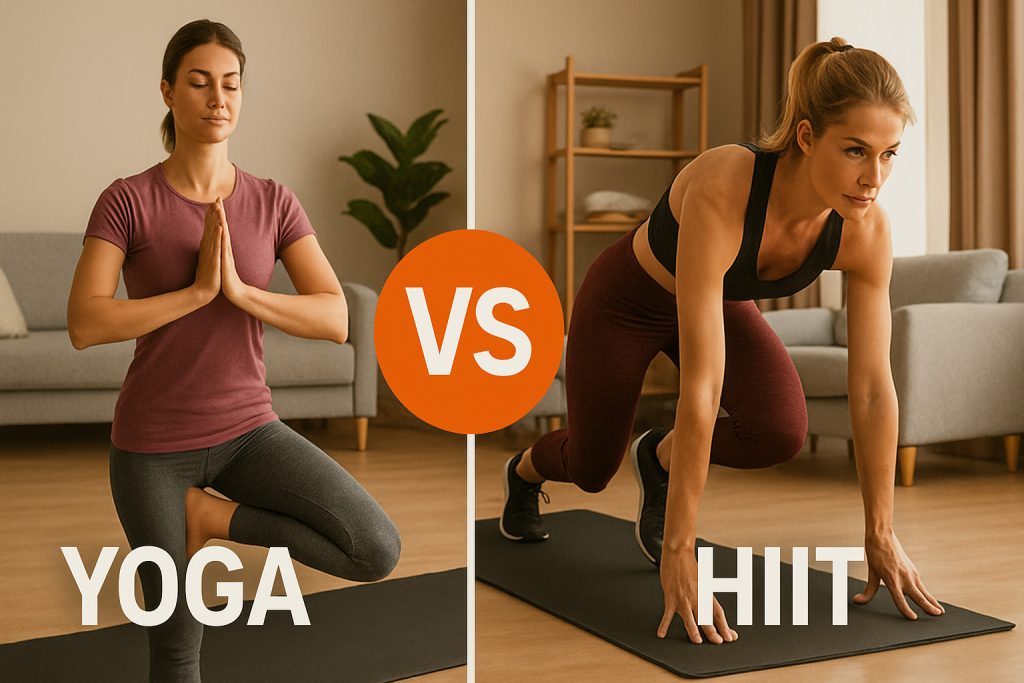
Fitness trends come and go, but two popular approaches—yoga and HIIT (High-Intensity Interval Training)—have stood the test of time. Each offers powerful benefits, but they serve different purposes and appeal to different people. Whether you’re looking to lose weight, gain strength, manage stress, or boost endurance, knowing how yoga vs HIIT compare will help you make smarter decisions for your health.
This in-depth guide explores the pros, cons, benefits, and ideal use cases of each training method, so you can choose what’s best—or learn how to combine them effectively.
Table of Contents
- 1 What Is Yoga?
- 2 What Is HIIT?
- 3 Yoga vs HIIT: Key Comparison Table
- 4 Benefits of Yoga
- 5 Benefits of HIIT
- 6 Drawbacks of Each
- 7 Which Is Better for Your Fitness Goals?
- 8 How to Combine Yoga and HIIT
- 9 Yoga vs HIIT Real-Life Case Studies
- 10 FAQs about Yoga vs HIIT
- 10.1 Which burns more calories: yoga or HIIT?
- 10.2 Is yoga or HIIT better for beginners?
- 10.3 Can I do yoga and HIIT on the same day?
- 10.4 Will yoga help me tone up?
- 10.5 Does HIIT help with flexibility?
- 10.6 Yoga vs HIIT : Which is better for mental health?
- 10.7 Can HIIT be dangerous?
- 10.8 What if I have joint pain?
- 10.9 How many times a week should I do each?
- 10.10 Is yoga or HIIT better for older adults?
- 10.11 Can I build muscle with yoga alone?
- 10.12 What’s the best combination of yoga and HIIT?
- 11 Conclusion: Which One Wins—Yoga or HIIT?
What Is Yoga?
Yoga is a centuries-old mind-body discipline that combines movement, breath control, and meditation. There are many styles, from slow-paced restorative practices to fast-flowing power yoga.
Key Characteristics of Yoga:
- Low to moderate intensity
- Focus on breath and alignment
- Builds flexibility, balance, and core strength
- Improves posture and body awareness
- Often includes mindfulness and relaxation
Popular styles include:
- Hatha – gentle, foundational poses
- Vinyasa/Power Yoga – dynamic and strength-focused
- Yin/Restorative – slow, deep tissue release
- Ashtanga – structured and athletic sequences
What Is HIIT?
HIIT (High-Intensity Interval Training) alternates bursts of high-effort movement with short recovery periods. Think jump squats, burpees, sprints, or kettlebell swings.
Key Characteristics of HIIT:
- High intensity, short duration
- Combines cardio and resistance work
- Efficient calorie burn in less time
- Promotes metabolic and cardiovascular conditioning
- Minimal rest between intervals
A typical HIIT session may last just 20–30 minutes but can be more taxing than an hour-long moderate workout.
Yoga vs HIIT: Key Comparison Table
| Feature | Yoga | HIIT |
|---|---|---|
| Intensity | Low to moderate | High |
| Duration | 30–60+ minutes | 15–30 minutes |
| Calories Burned (30 min) | 120–250 (style dependent) | 250–500+ |
| Main Benefits | Flexibility, balance, stress relief | Fat loss, strength, endurance |
| Impact Level | Low | Moderate to high |
| Best For | Stress management, joint health | Weight loss, fitness conditioning |
| Equipment Needed | Mat (optional blocks/strap) | Often bodyweight, may include gear |
| Mental Health Support | High (mindfulness + breathwork) | Moderate (endorphin release) |
Benefits of Yoga
Improves Flexibility & Joint Health
Regular yoga practice improves range of motion, reduces stiffness, and prevents injuries.
Enhances Balance & Stability
Great for older adults or athletes needing body control and awareness.
Supports Mental Well-being
Yoga is proven to lower cortisol and support anxiety and depression management.
Builds Functional Strength
Power yoga and poses like Chaturanga build muscle using bodyweight.
Ideal for Active Recovery
Helps reduce soreness and improves circulation between high-impact workouts.
Benefits of HIIT
Burns Maximum Calories in Minimal Time
HIIT continues to burn calories post-workout due to EPOC (Excess Post-Exercise Oxygen Consumption).
Builds Explosive Strength & Cardio Endurance
Ideal for athletes, runners, and those wanting a total-body challenge.
Supports Fat Loss
Short, intense sessions are extremely effective for fat-burning while preserving muscle.
Time-Efficient
Even a 15-minute session can be as effective as a longer, moderate workout.
Can Be Done Anywhere
Bodyweight-only HIIT workouts require zero equipment and little space.
Drawbacks of Each
❌ Yoga Limitations:
- May not raise heart rate enough for cardiovascular conditioning
- Slower physical transformation for goals like fat loss
- Requires consistency and patience to see flexibility gains
❌ HIIT Limitations:
- Not ideal for people with joint issues or heart problems
- Can lead to overtraining or injury if done excessively
- May cause burnout without adequate recovery
Which Is Better for Your Fitness Goals?
Here’s how yoga vs HIIT perform depending on your specific fitness goal:
For Weight Loss
Winner: HIIT
You’ll burn more calories faster and elevate metabolism for hours post-workout.
Tip: Combine HIIT 3x/week with yoga 2x/week to boost fat loss and recovery.
For Stress Relief & Mental Health
Winner: Yoga
Yoga’s focus on breath, mindfulness, and nervous system regulation is unmatched.
For Strength
Draw: Both Work
- HIIT builds explosive strength and muscle endurance
- Power yoga builds lean muscle and joint strength over time
For Flexibility & Mobility
Winner: Yoga
Yoga wins hands-down here—HIIT doesn’t focus on joint mobility.
For Cardiovascular Endurance
Winner: HIIT
Cardio gains are significantly faster with HIIT-style training.
For Injury Prevention & Longevity
Winner: Yoga
Yoga supports long-term movement health, joint care, and posture correction.
How to Combine Yoga and HIIT
You don’t have to choose! Many fitness experts recommend combining both for a balanced routine.
Weekly Sample Routine:
- Monday – HIIT (20–30 mins)
- Tuesday – Yoga (30–45 mins Vinyasa)
- Wednesday – Rest or Light Walk
- Thursday – HIIT
- Friday – Yoga (Yin or Hatha)
- Saturday – HIIT
- Sunday – Restorative Yoga or mobility work
Yoga supports recovery and injury prevention, while HIIT delivers metabolic firepower.
Yoga vs HIIT Real-Life Case Studies
Allison, 28 – Stressed Marketing Manager
“I started with HIIT to lose weight, but I burned out fast. Adding yoga 3x a week helped me manage stress and actually stick to a routine. Now I feel stronger and more centered.”
Marcus, 35 – Fitness Enthusiast
“I lift and do HIIT regularly, but my mobility was awful. Yoga helped me fix my posture, reduce injuries, and recover faster. I now do both, and I’ve never felt better.”
Teresa, 60 – Active Retiree
“HIIT was too intense for my joints. I’ve switched to yoga and gentle bodyweight intervals. I’ve maintained my weight, improved balance, and feel calmer.”
FAQs about Yoga vs HIIT
Which burns more calories: yoga or HIIT?
HIIT burns significantly more calories in a shorter time, especially for fat loss.
Is yoga or HIIT better for beginners?
Yoga is gentler and easier to start. HIIT can be intense, so beginners should ease in or combine both.
Can I do yoga and HIIT on the same day?
Yes! Yoga before HIIT can be a warm-up; afterward, it supports recovery.
Will yoga help me tone up?
Yes. Styles like power yoga build lean muscle and increase definition over time.
Does HIIT help with flexibility?
Not directly. HIIT builds strength and endurance but lacks mobility work—yoga fills that gap.
Yoga vs HIIT : Which is better for mental health?
Yoga offers greater mental health benefits due to mindfulness and nervous system regulation.
Can HIIT be dangerous?
If overdone or performed with poor form, HIIT increases the risk of injury and overtraining.
What if I have joint pain?
Yoga is a better starting point. Choose low-impact HIIT modifications later if cleared by a doctor.
How many times a week should I do each?
- HIIT: 2–4 times/week
- Yoga: 3–6 times/week depending on intensity
Is yoga or HIIT better for older adults?
Yoga is safer and more sustainable for older adults, especially for mobility and fall prevention.
Can I build muscle with yoga alone?
Yes, especially with power or ashtanga yoga. But gains are slower than with HIIT or resistance training.
What’s the best combination of yoga and HIIT?
Alternate days or follow HIIT with a short yoga cool-down. Prioritize rest and listen to your body.
Conclusion: Which One Wins—Yoga or HIIT?
There’s no one-size-fits-all answer in the yoga vs HIIT debate. Each style brings unique advantages depending on your goals, lifestyle, and fitness level.
- Choose HIIT if you’re short on time and want fast results for fat loss and endurance.
- Choose Yoga if you need flexibility, stress relief, or joint-friendly movement.
- Combine Both for the ultimate fitness formula—strength, balance, flexibility, and mental clarity.
